
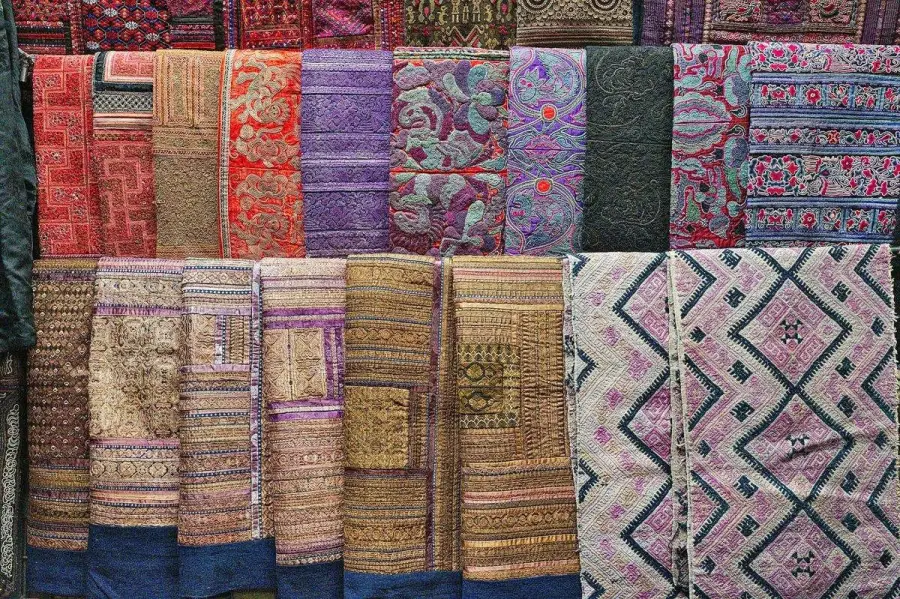
She hopes to buy a kantha for the baby she is waiting to meet.
মনের কাজ, work of the mind
Moner Kaj is a holistic, integrated programme in which people with lived experience of mental health conditions and neurodivergent people learn skills, make their own handmade products, and showcase and sell them online and offline. Around them, clinicians, researchers, designers and activists learn how creative work can heal, protect heritage, speak for the climate and change how society sees difference.
Why we exist
Across the world, millions of people with serious mental illness and neurodevelopmental conditions are shut out of work. In Bangladesh, most people with a mental health condition never reach care, and those who do often return to a labour market with no place for them. Employers hesitate, neighbours talk and families lower their expectations. The barrier is rarely ability. It is fit: rigid workplaces, no adjustments and no support once someone starts a job.
Moner Kaj closes the gap between clinical recovery and economic participation, so that getting better also means earning, creating and belonging.

Korail, Dhaka
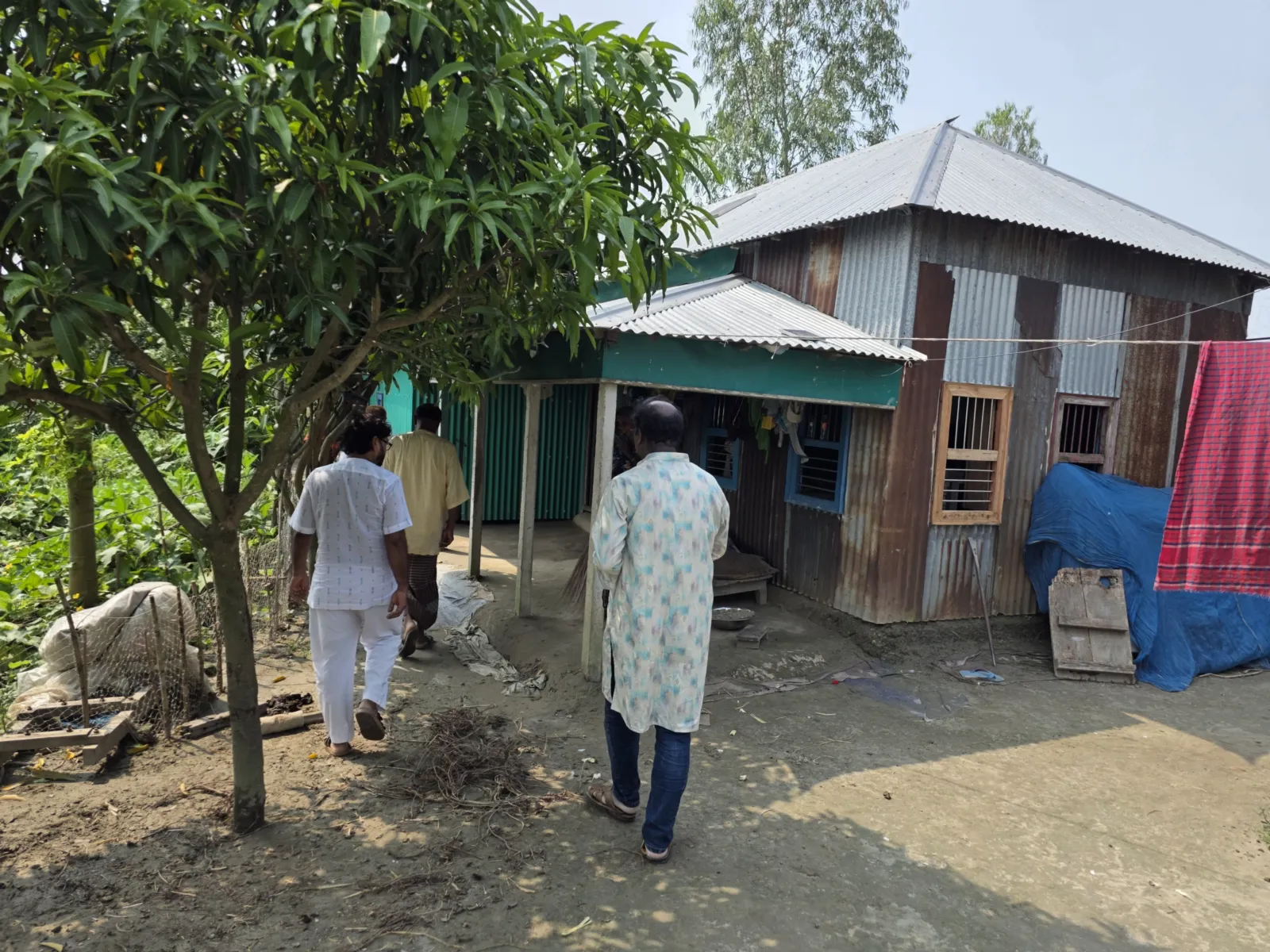
We work where people live. Our first Moner Ghor hub sits inside one of Dhaka's largest informal settlements, so the journey to work is a short walk, not a barrier.
How it began
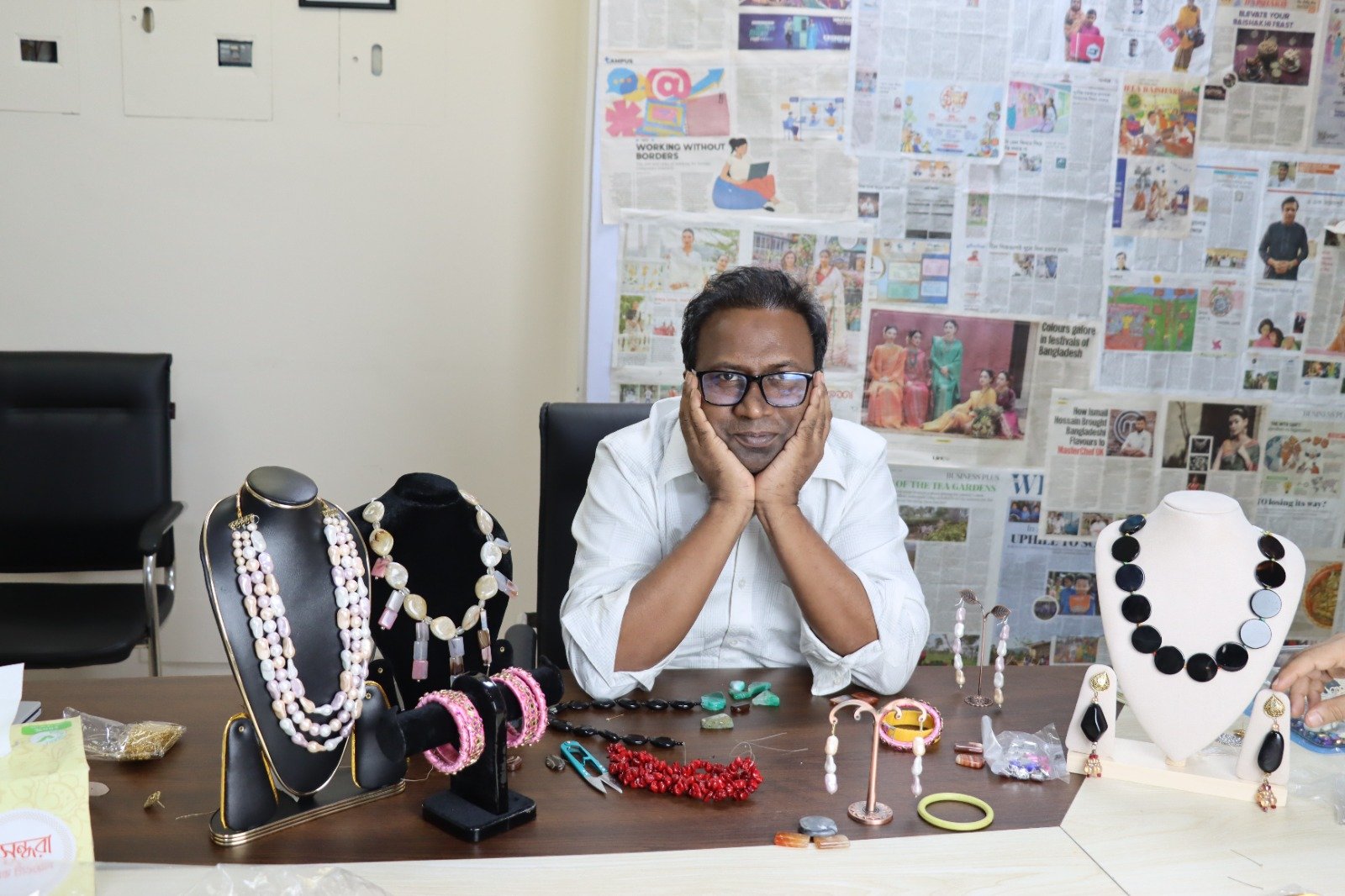
Over more than a decade of psychiatric practice, Dr Tanjir Rashid Soron saw the same pattern repeat. Patients responded to treatment, then returned to communities that offered them no work. Without an income, many lost their standing and their voice, even within their own families.
Many of them already had marketable skills, such as tailoring, stitching and beadwork. What they lacked was a workplace that adjusted to them, and a community ready to see them as contributors rather than patients.
Moner Kaj was built to provide both: a setting where people with lived experience learn, produce and earn at a pace that fits their health, and a visible body of creative work that changes how families and neighbours see them.
“Employment is not only income. It is the route to dignity, to belonging in the community and to lasting recovery.”
Dr Tanjir Rashid Soron, Founder
Our approach
Moner Kaj addresses a long-standing crisis that affects millions of people worldwide: the exclusion of people with serious mental illness (SMI) and neurodevelopmental conditions (NDDs) from work and community life. We integrate creative skills development, local production and market access to support social and economic inclusion, through six complementary components.
Craft, design and service skills, taught in small groups at a pace that fits each person.
Handmade products that carry the maker's own culture, stories and name.
Products and services shown and sold online, in exhibitions and in local markets.
Income, recognition and rights that change the person's place at home and in the community.
Numbers match the six components listed below.
We link specialised digital platforms with a network of local production hubs. The hubs provide space for practical learning, product development and service delivery, while the platforms connect makers to training, orders and buyers beyond their neighbourhood.
We connect training directly with opportunities to apply skills, produce goods and offer services. Participants sell their products and provide services through both online and offline channels, so learning leads straight to market access and income.
We are developing skill-building courses that connect cultural expression with product development and online and offline sales. Alongside them, we are designing structured creative-arts interventions to support clinical improvement, psychosocial development and quality of life.
We study how participation in creative work relates to clinical outcomes, social participation and economic wellbeing, at three levels: the individual, the organisation and the community.
We examine how communities, families and employers view the capabilities and employability of people with SMI and NDDs, and how those attitudes change when people see their work.
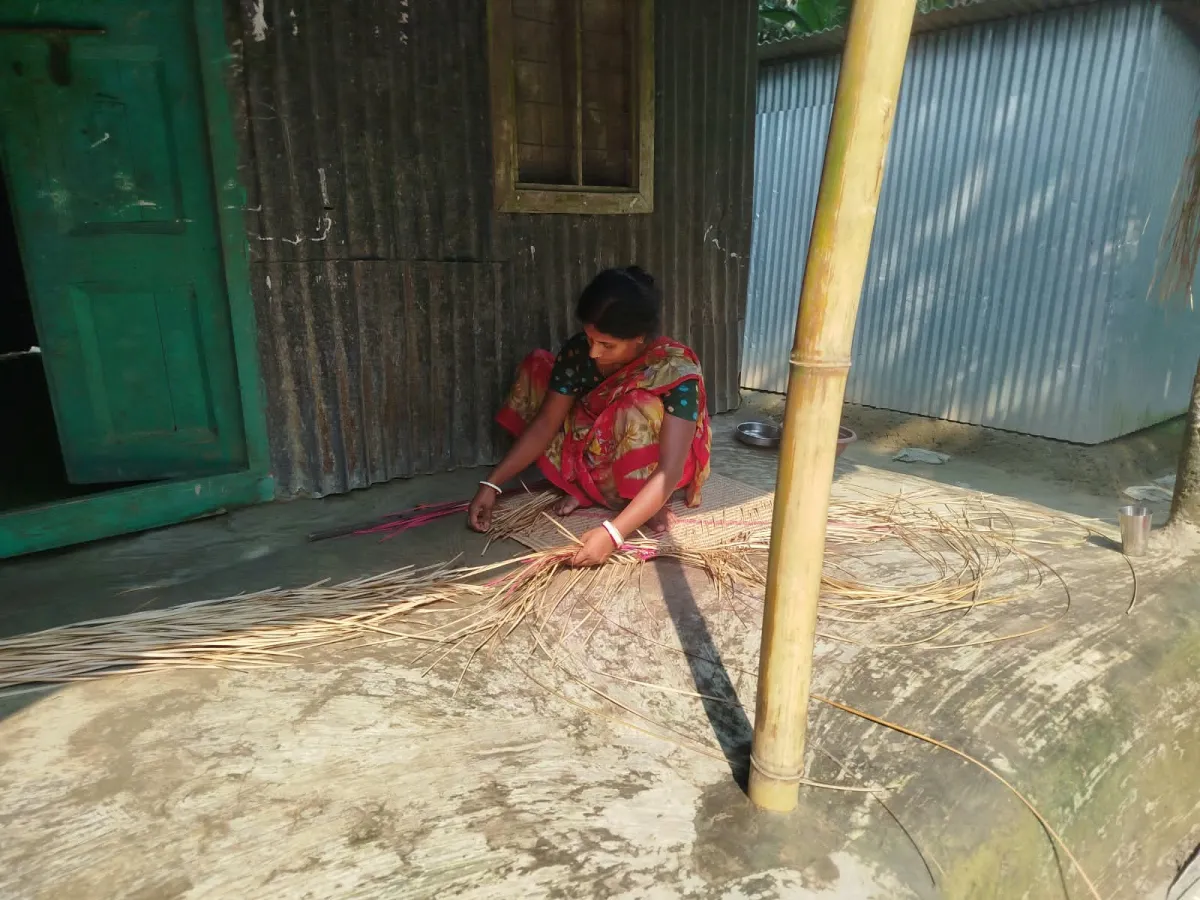
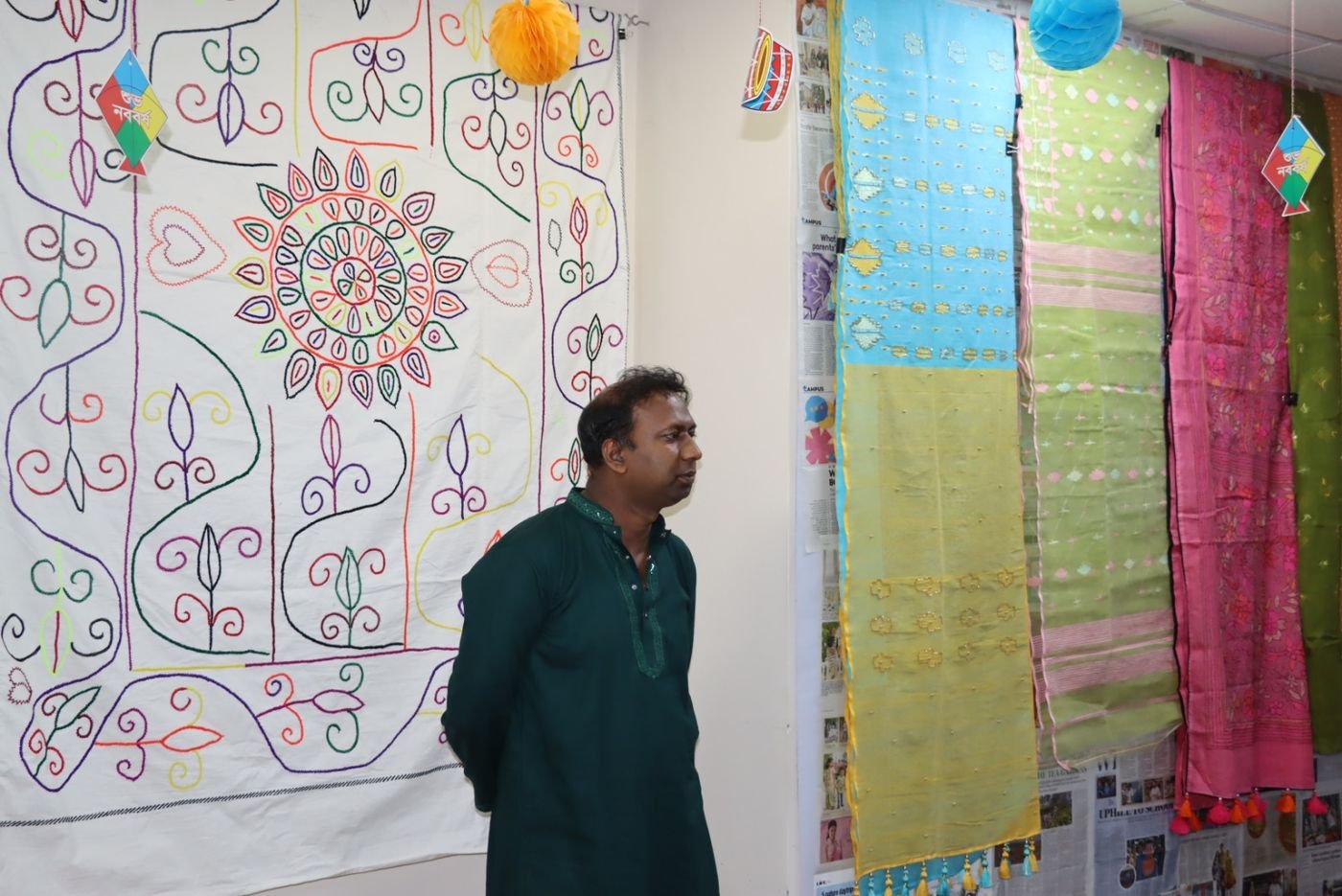
Through culturally relevant learning and creative production, including Nakshi Kantha, stitching and beadwork, we help keep local creative traditions alive. Economic inclusion and cultural continuity advance together.
Where the work happens
We operate through climate-adaptive, culturally grounded facilities called Moner Ghor. Rather than forcing people into rigid, neurotypical corporate environments, we use a place-and-train approach to supported employment, integrated with creative therapies and community integration.
| Conventional train-then-place | Moner Kaj place-and-train | |
|---|---|---|
| Starting point | Long pre-vocational training before any real work | People join a hub and begin real, paid production early |
| Workplace | The person adapts to a rigid, neurotypical setting | Tasks, hours and settings adapt to the person |
| Support | Ends when the person is placed | Continues on the job, with clinical care and creative therapies |
| Community | Work happens away from family and neighbours | Families and neighbours see the work and the maker's skill |
Join a Moner Ghor hub close to home and start contributing to real production early.
Build craft and service skills on the job, in small groups and at a pace that fits each person's health.
Receive ongoing clinical care, creative-arts therapies and peer support, so work survives difficult periods.
Sell products and services online and offline, earn a fair income and take a valued place in the community.
Stories from Moner Ghor
Six short stories, written from time spent with the makers at the Moner Kaj hub. No names are used.
She hopes to buy a kantha for the baby she is waiting to meet.
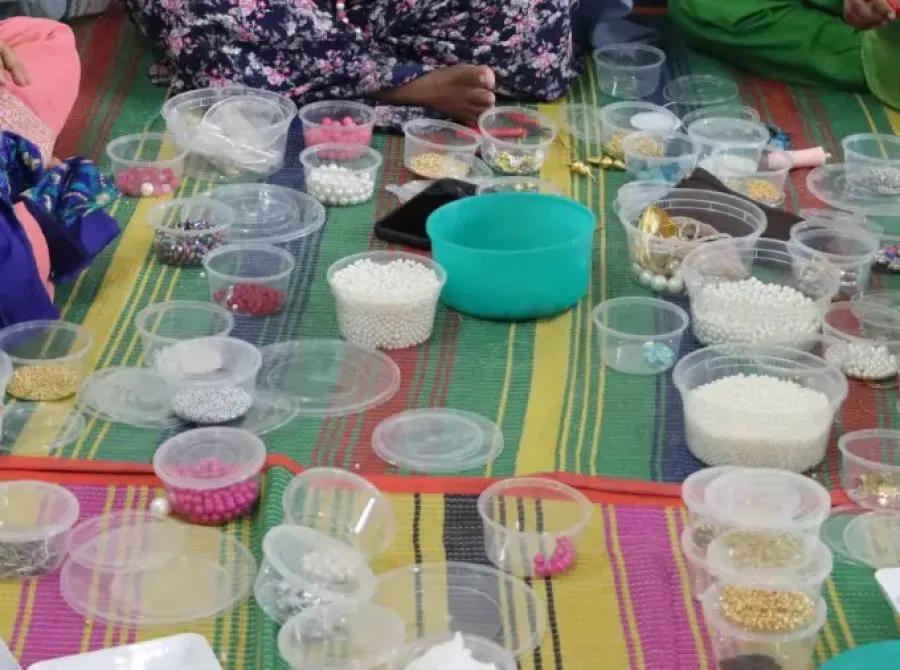
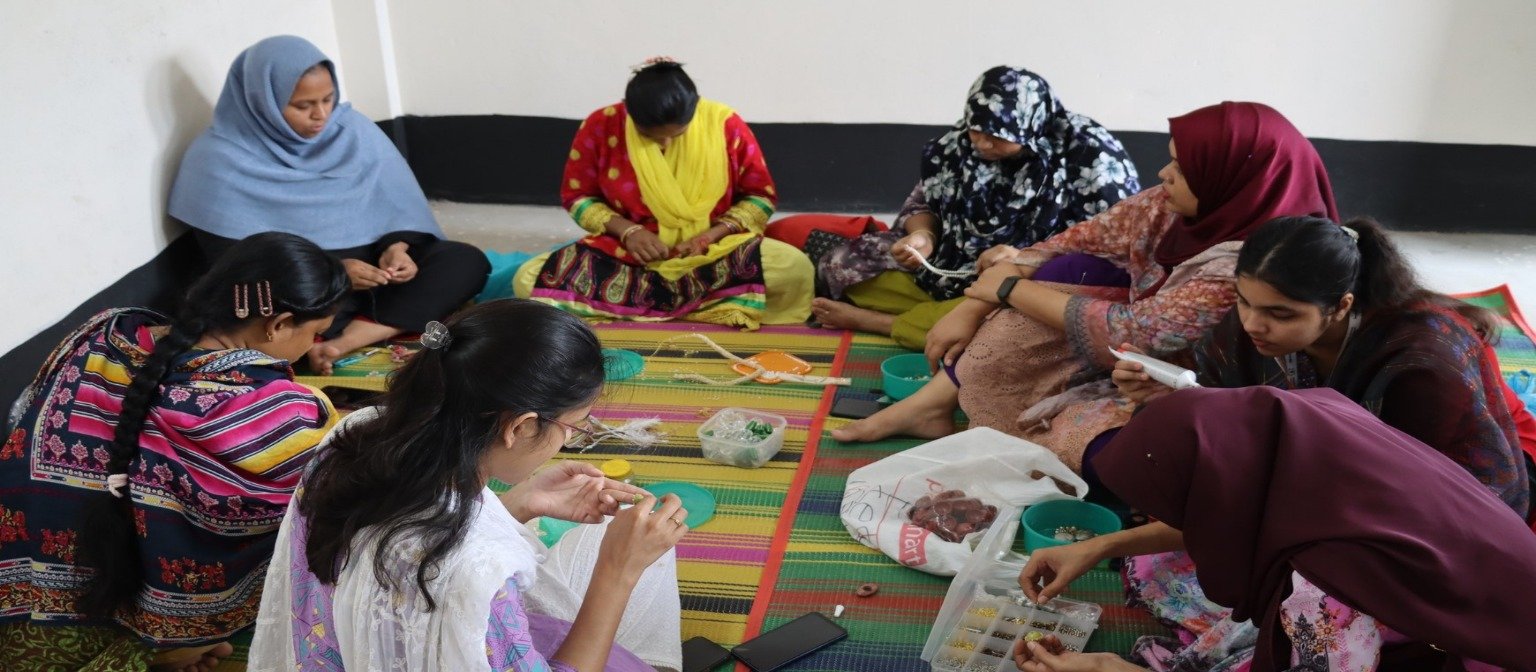
The little girl sits quietly, watching as her mother threads beads together, one after another.
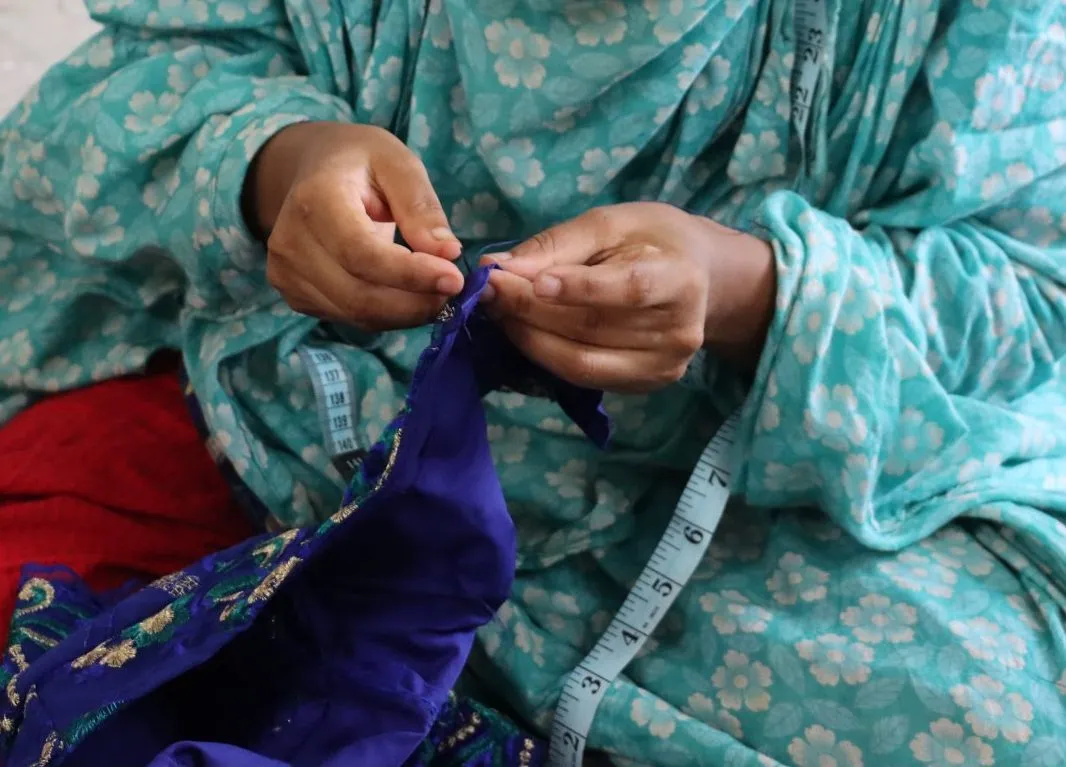
There was no correct way of being a craftswoman, and at the end of the day, both got the work done.
Nothing has been lost that cannot be put together again.
No two lunch breaks are ever the same. Everyone has their own routines.
I begin as a handful of beads scattered across a tray.
At Moner Kaj, the work takes shape in small things. For one mother-to-be, the money she earns has a particular purpose. She hopes to buy a kantha for the baby she is waiting to meet.
A kantha is a familiar thing in many Bangladeshi homes. It endearingly wraps around sleeping babies’ little shoulders when the air turns cold. Soon, this mother hopes she will have one ready for her own baby.
Her journey has not been easy. She has struggled with poor mental health and experienced domestic violence. But now, putting her skills to use, she is able to contribute towards a significant life moment.
There is something meaningful about the materialization of her earnings to the kantha. The work she does today will help provide something her child needs tomorrow. Her hands are making more than jewellery; they are helping her celebrate a new life.
And so, the work at Moner Kaj reaches beyond the simple products they make. Its benefits intertwine with their homes, into the lives of their children, and into a generation that has yet to begin its own story.
Somewhere in the future, a baby will be tucked beneath a kantha its mother lovingly bought, with her own income, one day’s work at a time.
The little girl sits quietly, watching as her mother threads beads together, one after another. Every now and then, she reaches over to pick up a bead. Her mother gently takes it back and continues working.
Around them, the other women are also busy with their crafts. Beads click against one another. Someone laughs from across the room. The girl watches for a while before getting up and wandering around.
“I bring my child because there is no one at home to look after her,” her mother says.
So she comes to work with her mother.
Sometimes she runs around the halls of the Moner Kaj hub with the other children. Sometimes she watches the women make jewellery with eyes full of curiosity. Other times, she simply sits and waits.
Her mother keeps working, stopping every few minutes to check on her daughter.
“Don’t play with those!” the mother suddenly exclaims pointing at some threads, as she catches her daughter with a mischievous grin. She giggles and sprints to join another child; a boy busy separating the different colours in a box of beads.
For the women, the hub is a place to work, but for their children, it has become a place to play, explore, and satisfy their curiosity…
The lace borders of two sarees had been sewn on incorrectly. So, two women were given the same task: take them apart and start again.
One picked up a sharp needle and started to undo the sewing slowly. Every now and then she stopped to stretch out the saree and observe her progress before resuming.
The other? A completely opposite scenario. She picked up the saree and began pulling on the thread aggressively. Pretty soon, a few stitches snapped and a long section of lace came off. This woman worked with less precision, yet was quicker.
“If you do it like this, it might tear!” exclaimed the first woman, glancing at her friend. “Not if you are mindful” giggled the other.
Even the way they sat was different. One was bent close to her work, completely absorbed. The other kept looking up, chatting with the women around her between pulls. There was something beautiful in how two women with contrasting personalities, who suffered different obstacles in life, were united in working towards the same task.
Watching them work side by side, it was hard not to notice this contrast in approaching the same work. There was no correct way of being a craftswoman, and at the end of the day, both got the work done.
The knot won’t hold.
She pulls the thread tight and tries again. The beads shift against one another, but the knot loosens. She tries once more, concentrating on the small space between her fingers. Still, it won’t cooperate. Just a while ago, the bracelet was coming together, bead after bead in perfect harmony. Why did the knot at the end have to be so stubborn?
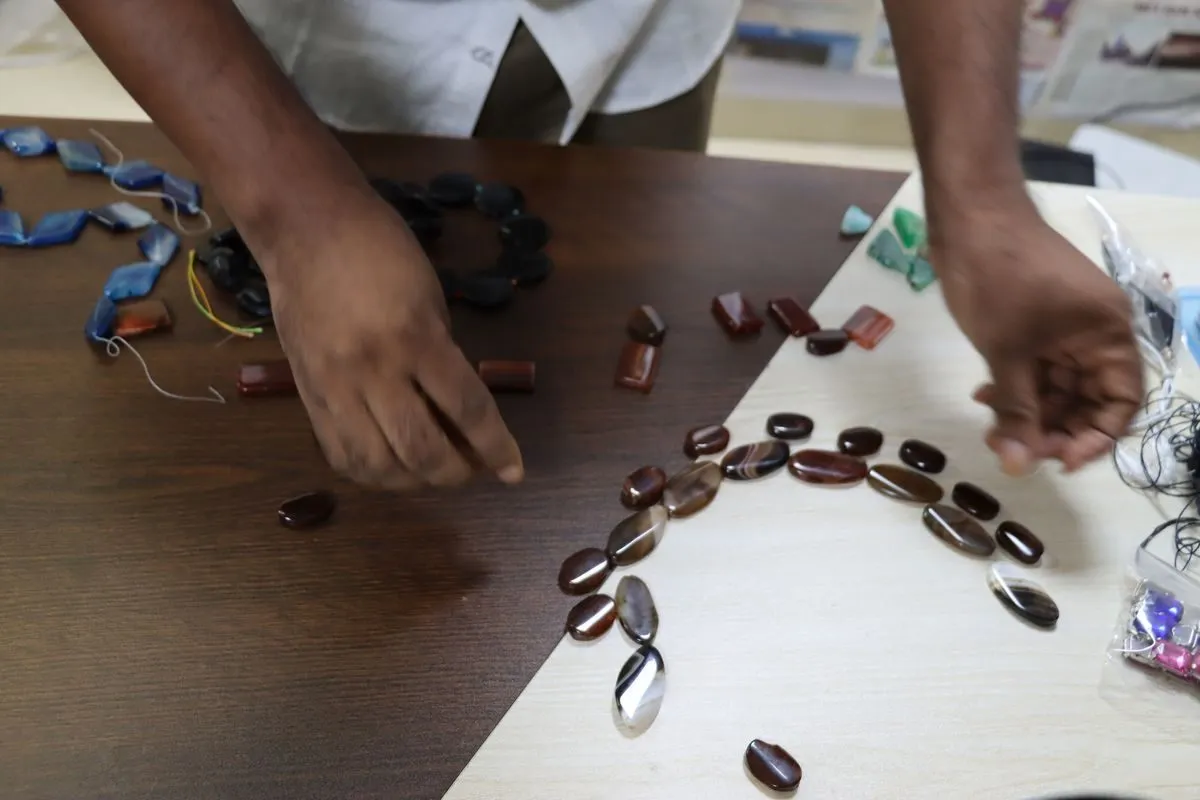
The jeweler is impatient. So, to the surprise of all the other women, with a sharp tug she suddenly pulls apart the entire bracelet. Beads scatter across the work-mat, the empty thread in her hand.
There is a particular kind of frustration in watching something refuse to become what you want it to be. Sometimes, the urge to start again is stronger than the desire to salvage what you have already made.
But the good part of the story is that the bead; the thread; her crafting hands are all still there. Nothing has been lost that cannot be put together again.
Sometimes, life leaves us with nothing but scattered pieces. Moner Kaj gave her the opportunity to gather those pieces and start over. It was time she gave this bracelet the same treatment: Begin from scratch until it is a beautiful art piece.
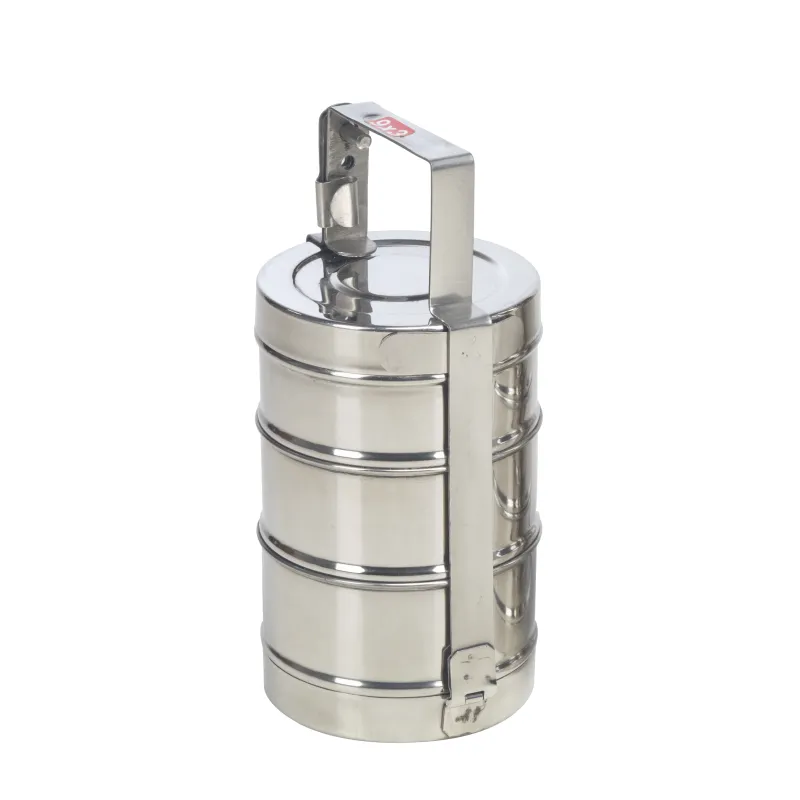
Lunch break arrived, and temporarily the beads were abandoned. A few minutes ago, the floor mat was covered in half-finished jewellery and sewing materials. Now, the scene changed. Boxes of biryani were neatly placed in front of each craftswoman. Even the little one got their own boxes.
Some women immediately unwrapped their portions and began eating, while some had other priorities. The mothers open the boxes and begin feeding their children by hand, taking a bite themselves whenever they get the chance. A few women do not touch their boxes at all. Why? They will take it home to have later, maybe share it with the family.
No two lunch breaks are ever the same. Everyone has their own routines. Some eat fast, while others take their sweet time finishing every bite. Some plead with their children to take “just one more bite” while the children refuse to sit still. Perhaps the women tucking away their boxes are also thinking of their children when they do.
Around the pati, the women eat, laugh, tend to their children, and check up on one another. Soon enough, the boxes will be empty, the beads will return to their hands, and the work will begin again.
But for now, it is lunchtime at the Moner Kaj field office.
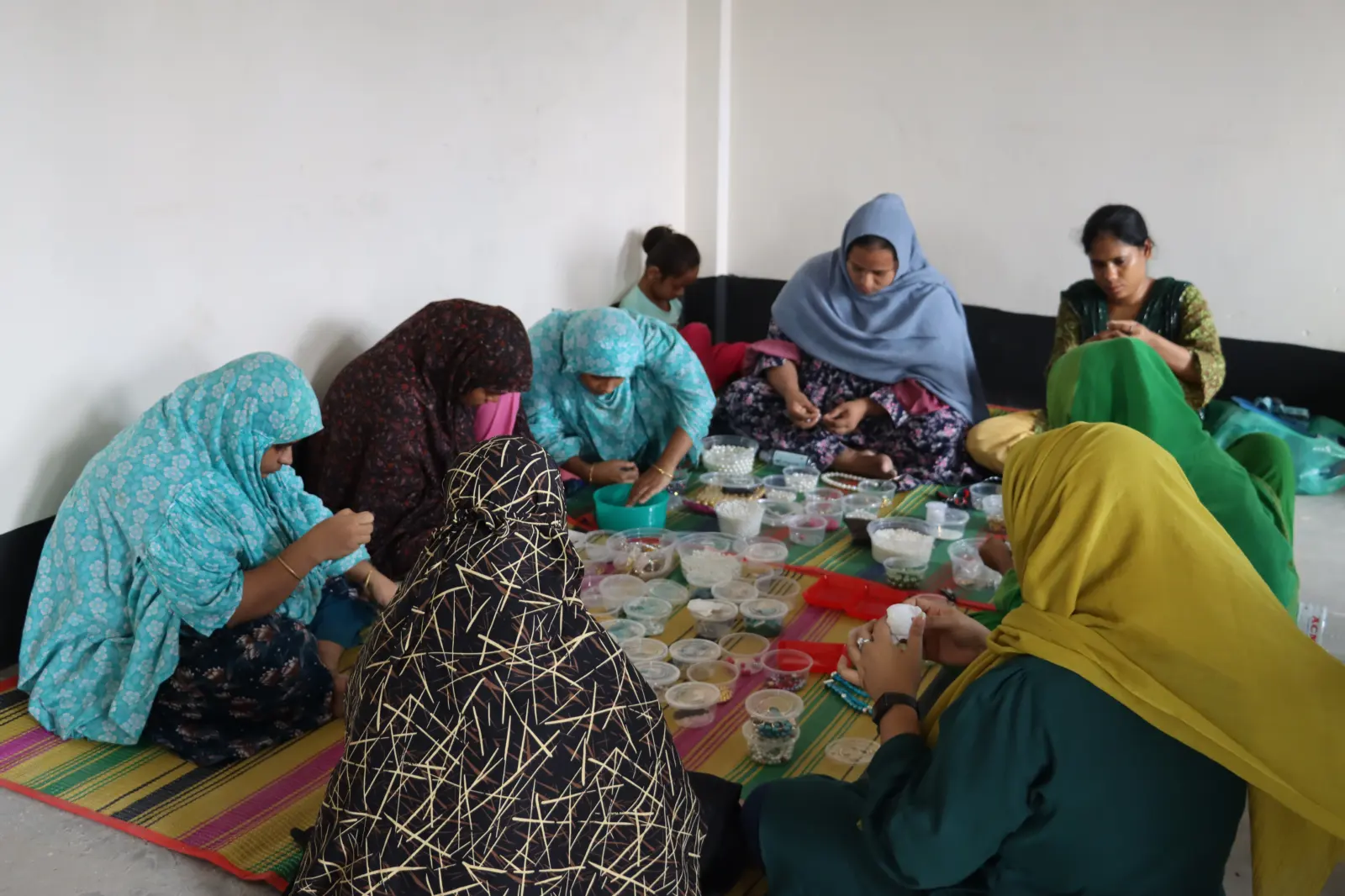
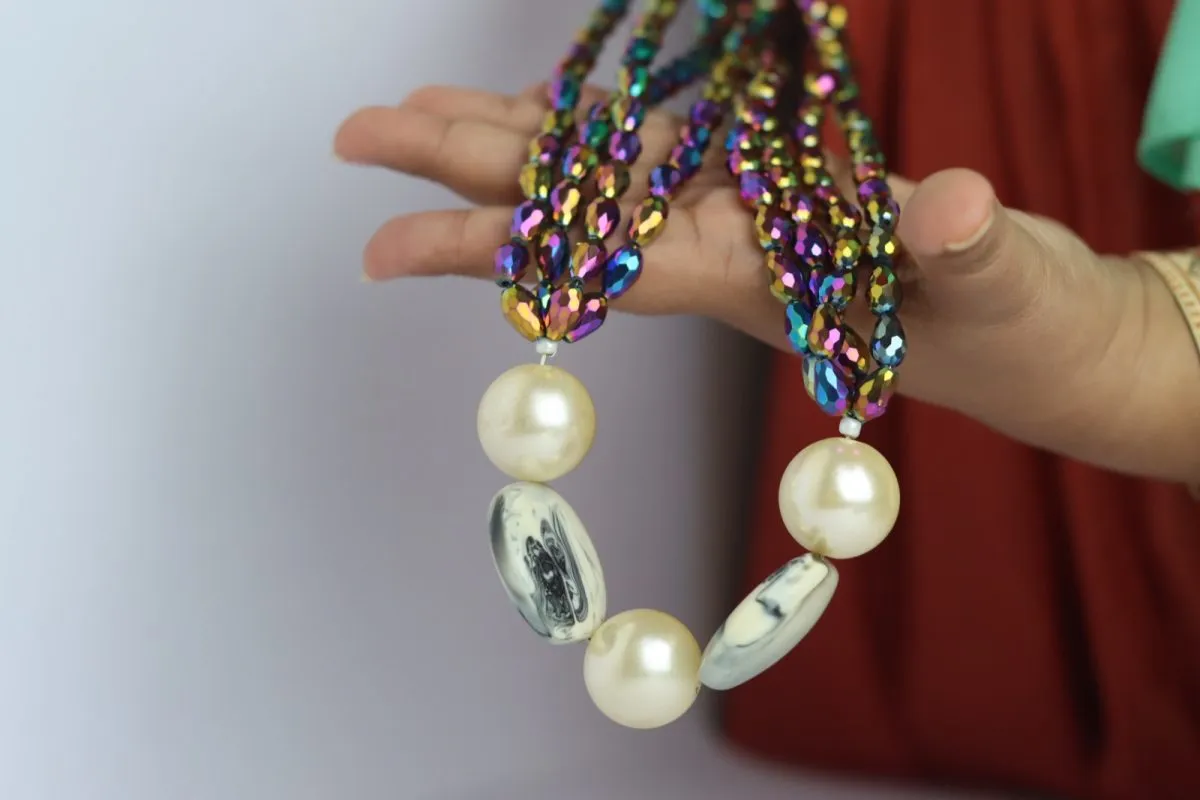
I begin as a handful of beads scattered across a tray. Some of them are pearly white, while others have a golden shimmer to them. For now, I am a collection of little pieces, until a woman picks me up…
She chooses the beads one by one, arranging them along the thread. First, a white one, then a golden one. She continues alternating between the two shades and slowly, a necklace begins to emerge. Her fingers guide the thread through each tiny opening, bringing the beads together neatly. Although I am merely a necklace, my maker’s worn-out face tinted with hope tells me a lot about her personal struggles and her eventual rise above it all.
It takes patience to make me. The beads have to sit just right. The thread must hold. And at the end, the knot must be secure enough to keep everything in place. The woman puts in just the right amount of care in each step.
I will eventually leave this workspace. Someone might choose me from a display, fasten me around their neck, and wear me to a family gathering or simply on an ordinary afternoon. They may admire my patterns and know that I come from Moner Kaj. Yet, they may never know fully the stories of the hands that brought me together, but I carry a piece of my maker’s resilience and perseverance in every bead.
A shared learning lab
Moner Kaj is also a meeting place for disciplines that rarely work together. Clinicians, researchers, therapists, sociologists, environmentalists, designers and activists work alongside the makers, and learn from them, to co-develop creative arts as locally contextualised interventions for mental health and wellbeing.
Makers with lived experience
Experts in their own lives, crafts and communities, and co-developers of every intervention
Culture, environment and climate
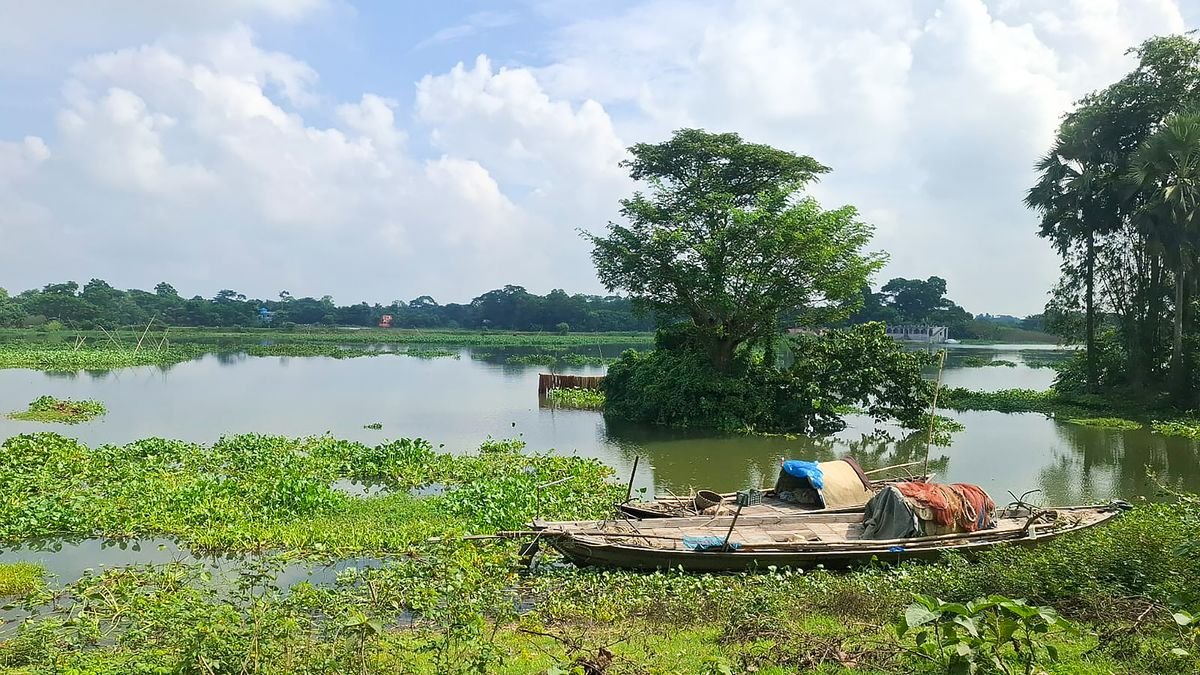
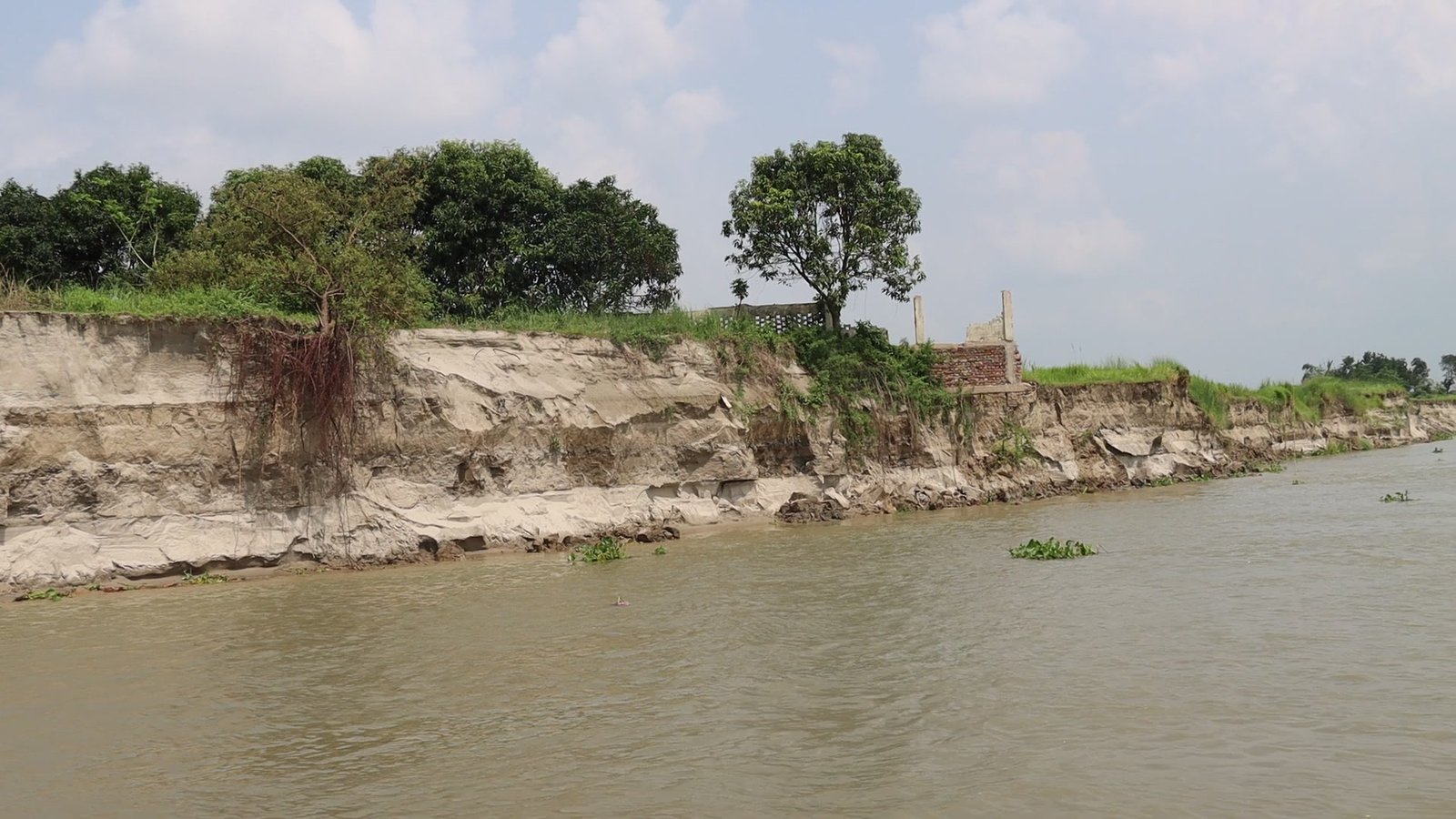
Nakshi Kantha has always been a narrative art: women stitched their lives into cloth. At Moner Kaj, artisans use this tradition to tell their own stories of the floods, cyclones and river erosion that broke apart homes and livelihoods. Each piece is a product, a record and a quiet act of protest.

Our journey
We did not start with a finished plan. We started close to the people this work is for, and built each stage from what they told us.
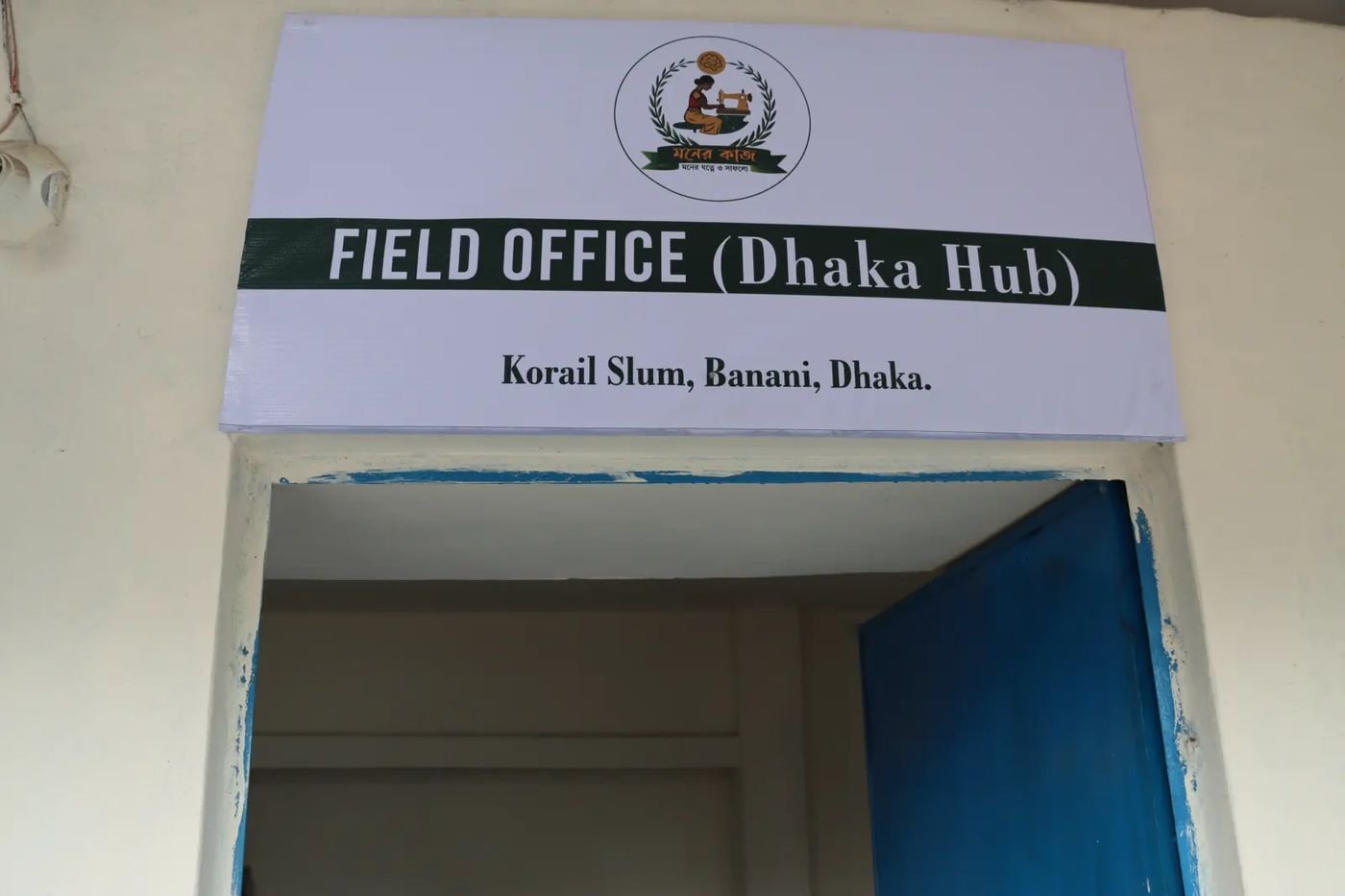
We opened our first field office in Korail, one of Dhaka's largest informal settlements, so that getting to work never requires a long or costly journey.
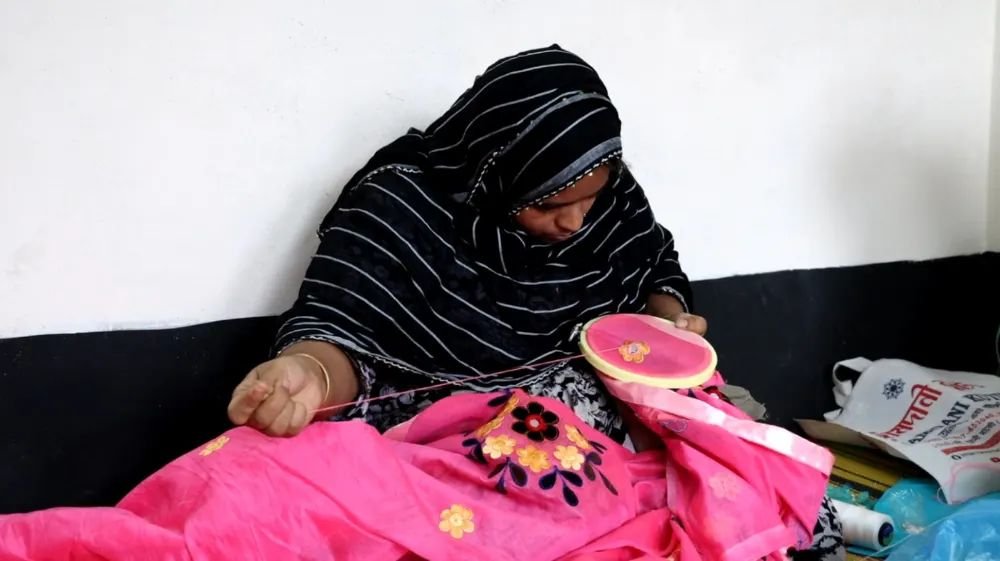
We met future makers and their families before designing anything. Which hours suit them? Which crafts do they already know? What makes a day hard? Their answers, not our assumptions, set the design.
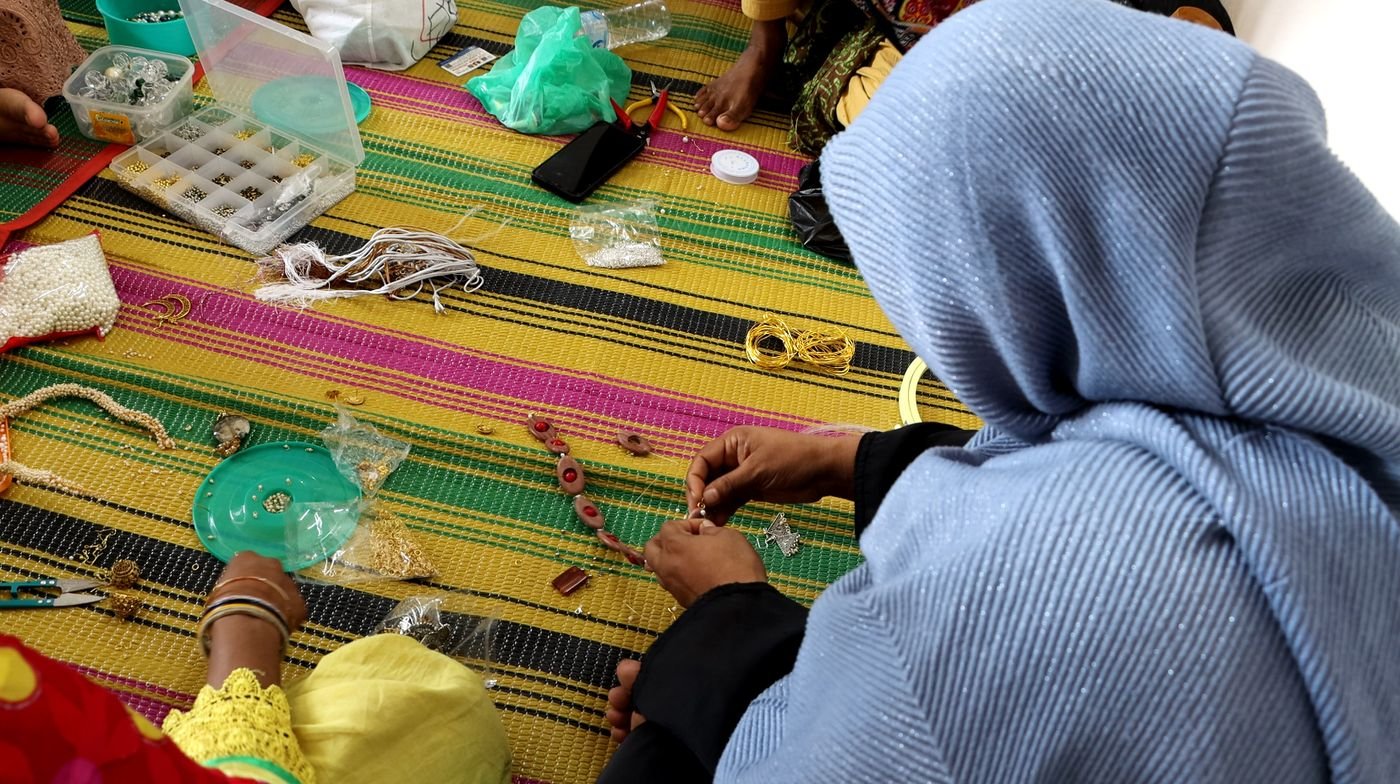
Those conversations became our training approach: self-paced learning in small groups, with support always nearby on harder days.
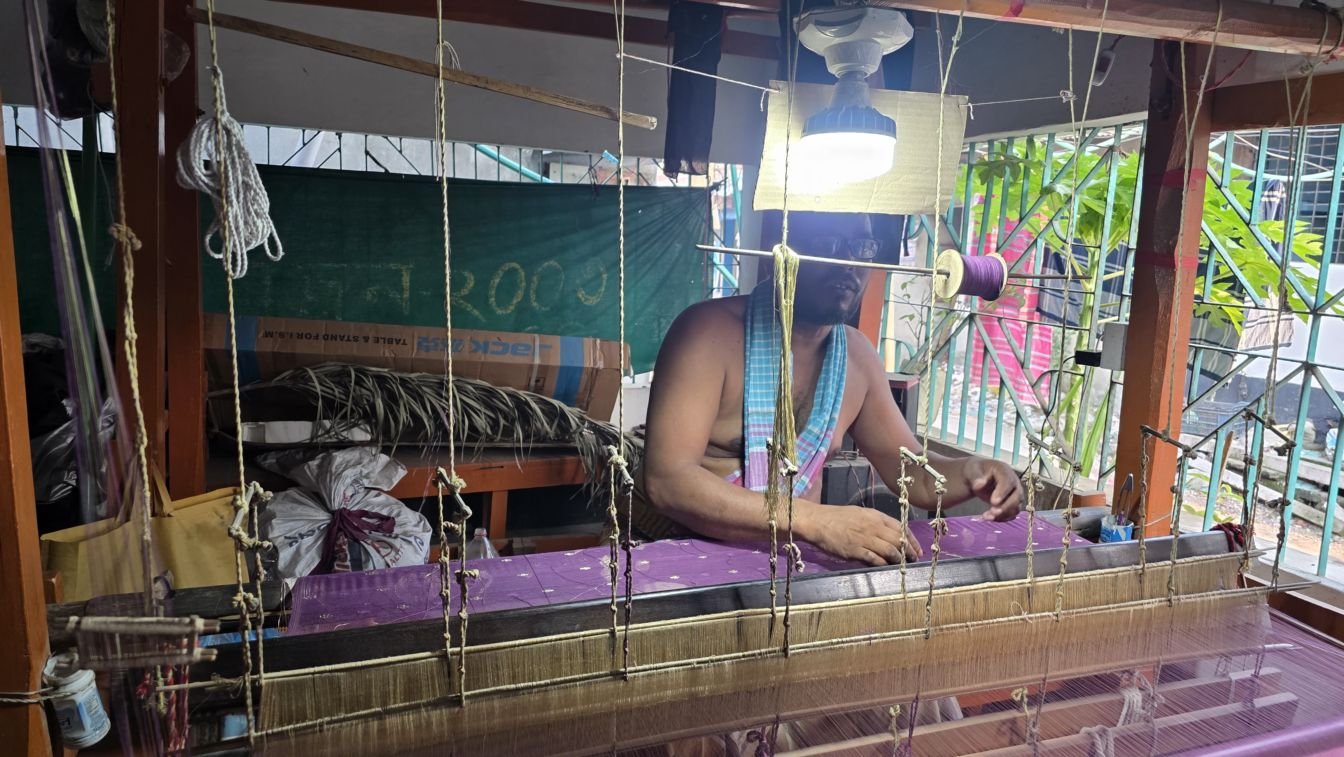
Makers learned beadwork, jewellery-making and stitching from trainers and from each other. Skill and confidence grew together.
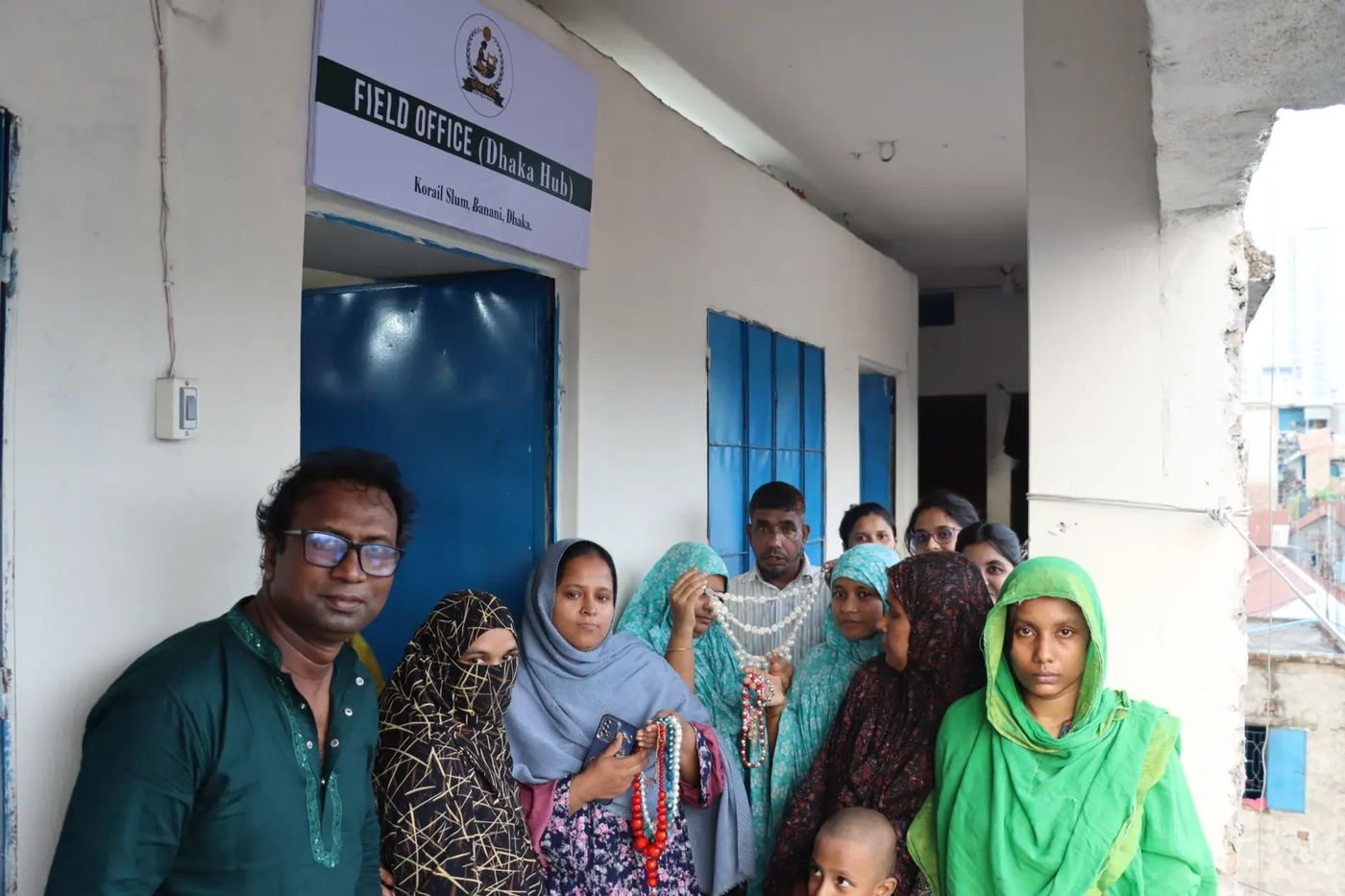
Once ready, each maker took on their own orders. The first necklaces, bangles and stitched pieces went on sale, and every maker was paid for the work they produced.
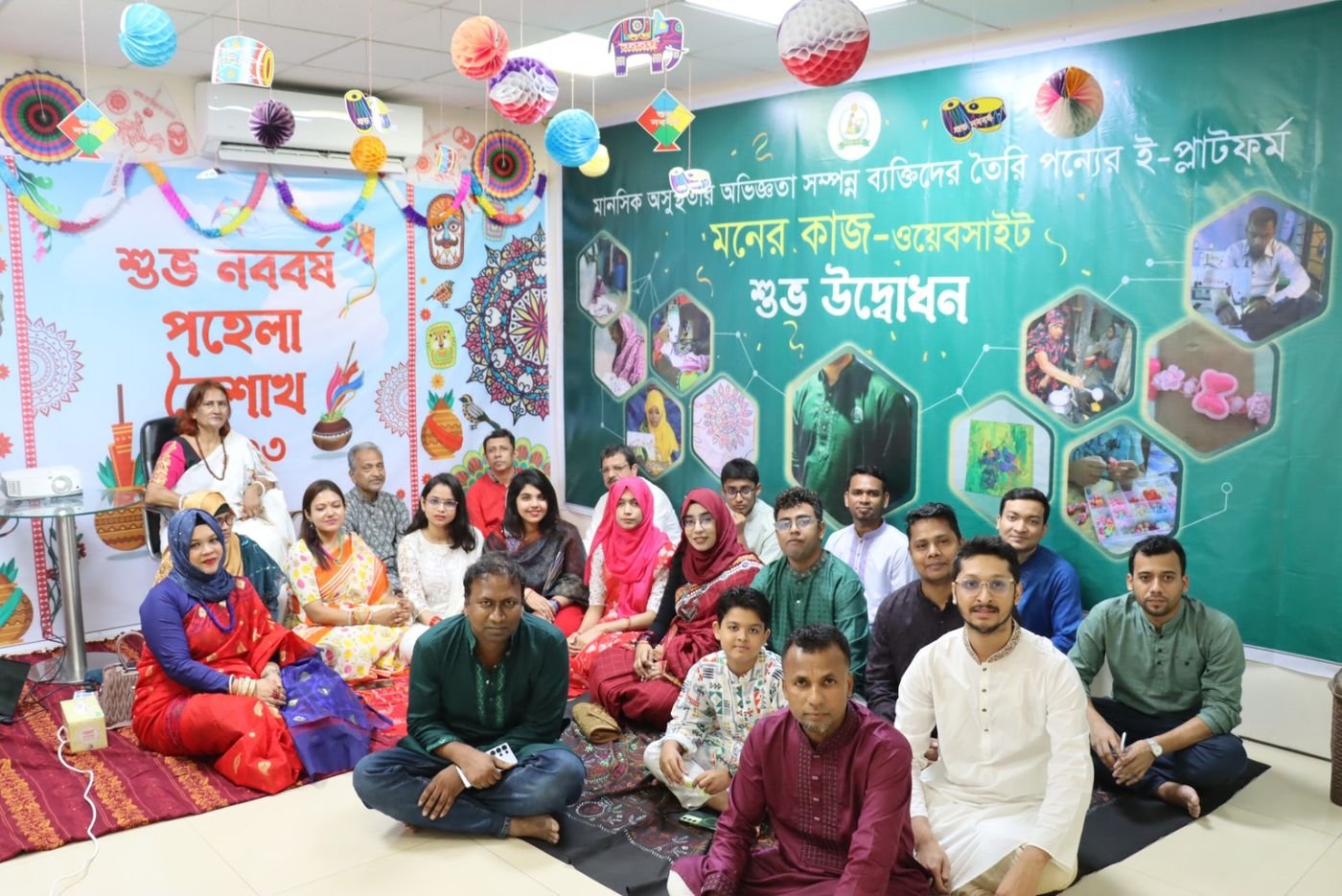
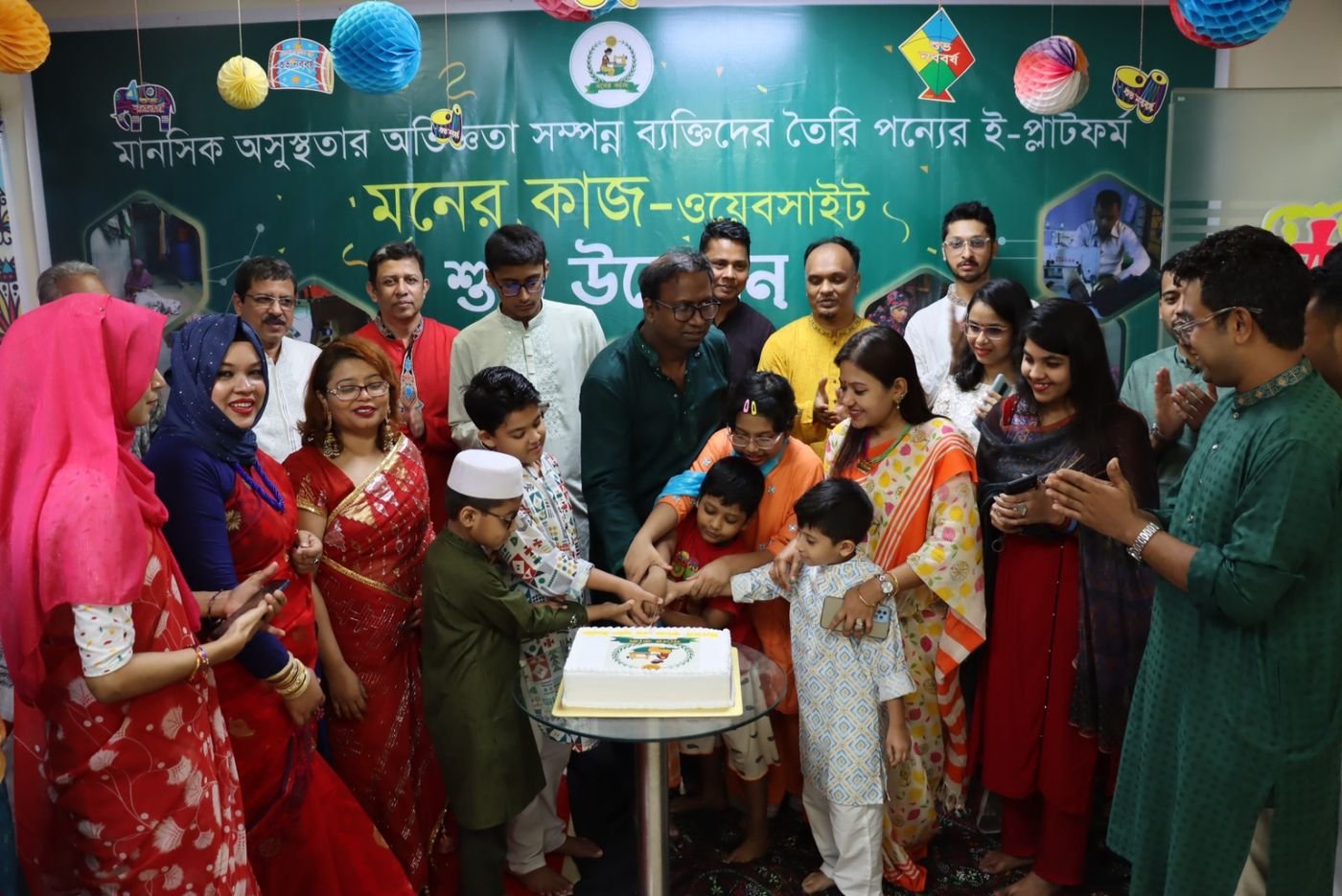
We launched Moner Kaj publicly on the first day of the Bengali year. The makers' Nakshi Kantha, sharees and jewellery filled the room.
Leading mental health professionals from across Bangladesh attended, met the makers, examined their work and discussed how the model could grow to other communities.
What guides us
Every maker is a worker and a contributor, never a case. We use people's names, not their diagnoses.
Work, income, safety and a voice are human rights for people with mental health conditions and neurodivergent people, not favours.
People with lived experience help shape every decision, from working hours to product lines. Nothing about them is decided without them.
We adjust tasks, hours and settings to the person, so different minds have room to do well.
We build on the crafts, stories and traditions people already carry, and treat them as assets in the market.
Makers know what each piece earns and are paid for the work they produce.
We measure what changes in people's lives and publish what we learn, including what does not work.
Research agenda
Every hub is also a living laboratory. We study the programme as we build it, so that what we learn in Korail can inform practice and policy for vulnerable communities elsewhere.
How can locally contextualised, co-developed creative-arts interventions improve clinical outcomes, psychosocial functioning and quality of life for people with SMI and NDDs?
How can artisans with lived experience help protect their environment and keep local cultural heritage alive through their craft?
How can handcrafts that portray personal stories of climate disasters serve as testimony, advocacy and protest for climate justice?
Can a venture built with ultra-poor and vulnerable communities, often with limited formal education or cognitive difficulties, sustain itself financially, and what does it cost per person in sustained work?
How does the community's perception of serious mental illness and neurodivergence change, and what follows for employment, human rights and dignity?
How do people with limited education or cognitive capacity interact with AI tools, where are they at risk of exploitation or harmful amplification, and what safeguards protect them?
We track clinical, social and economic change in each person, in the organisation and in the wider community.
Our primary outcome is the share of participants earning from their work for at least six of every twelve months. Research is conducted with informed consent and appropriate ethical review. Read more on our research page.
The team
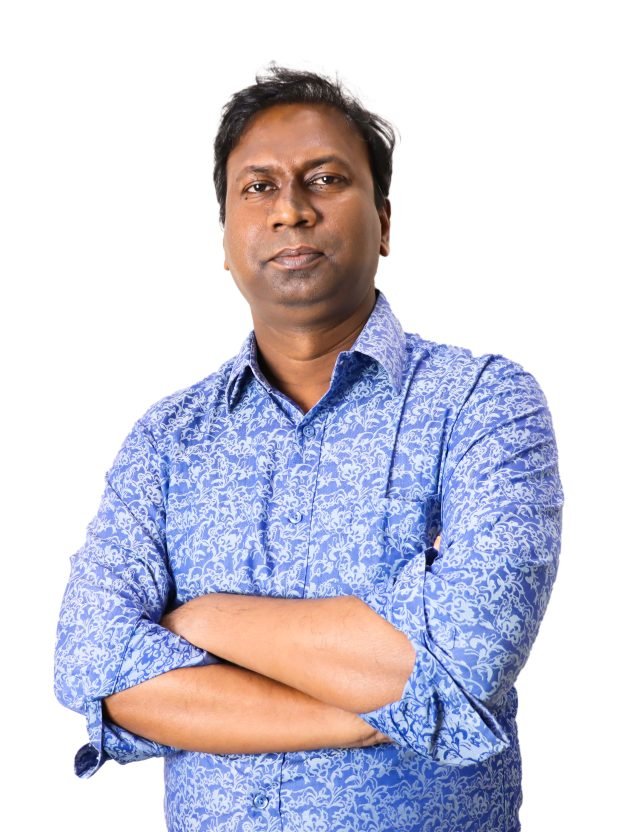
Psychiatrist with more than 12 years of practice in Bangladesh, digital health researcher and implementation scientist. Founder of the Telepsychiatry Research and Innovation Network (TRIN) and NiHealth, and a Commonwealth Scholar in eMental Health.
Clinical oversight and care planning
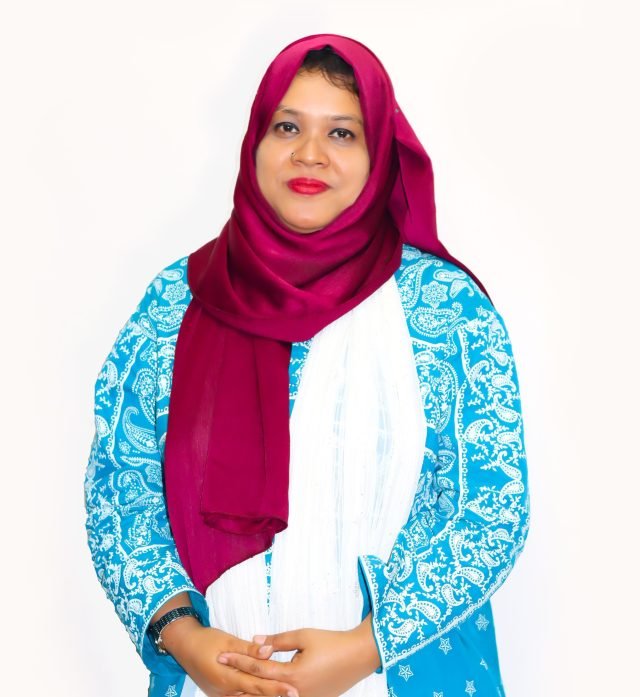
Therapy and day-to-day support
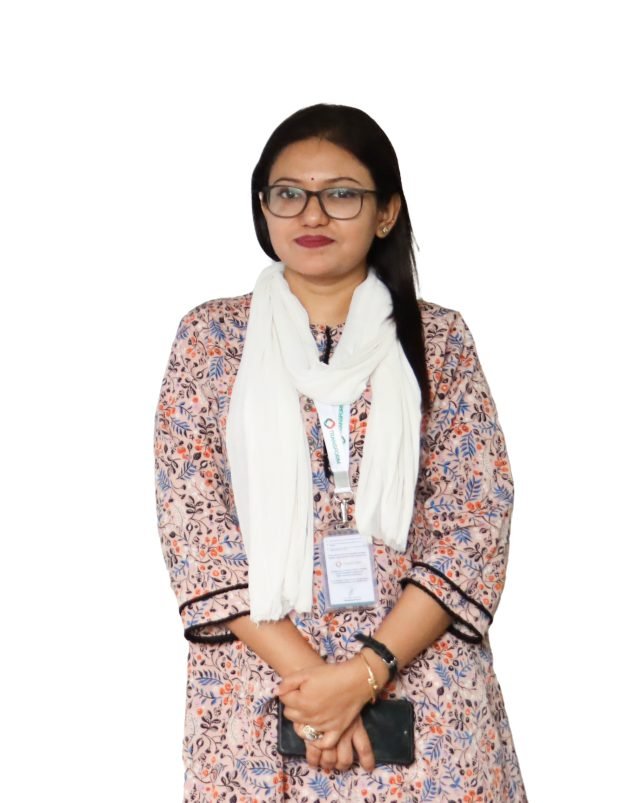
Community engagement and evaluation
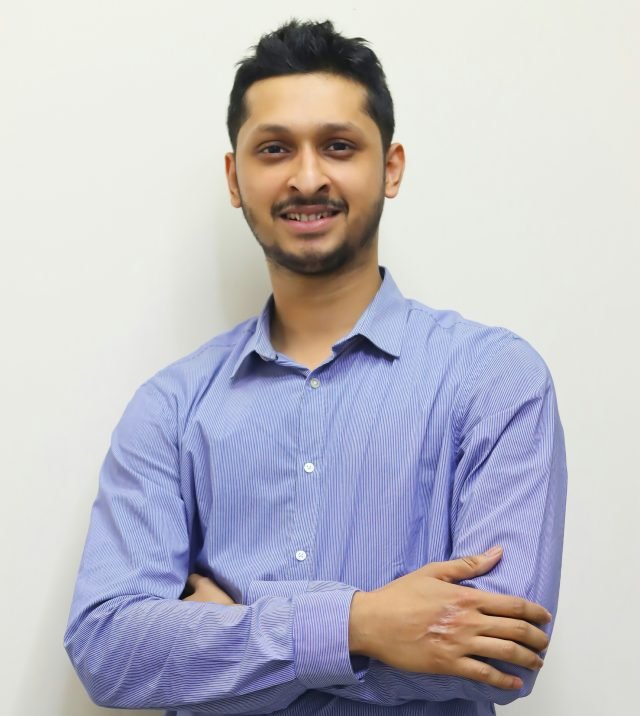
Digital tools, training and the shop
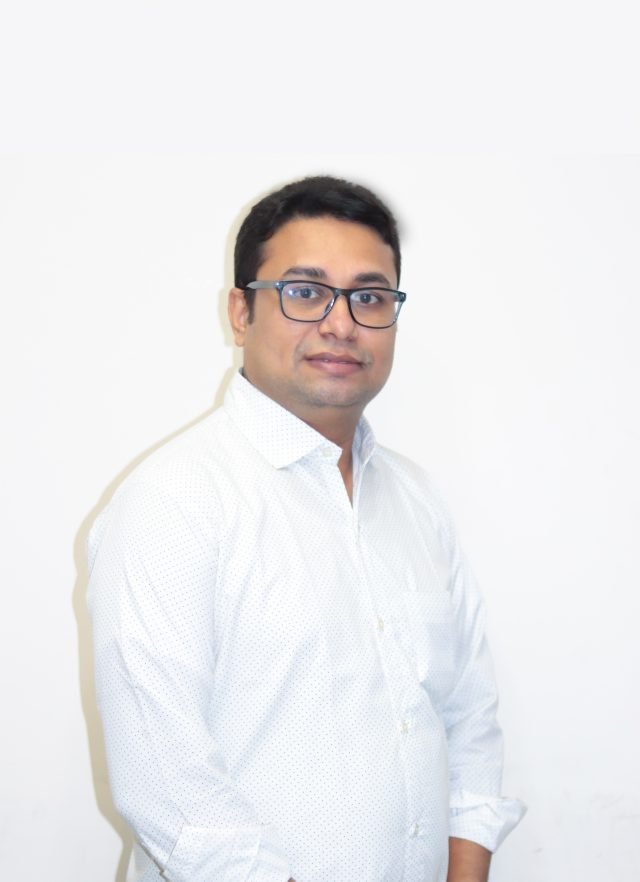
Teaches jewellery-making and handcrafts, drawing on his own lived experience
Institutional backing
Moner Kaj is a sister concern of NiHealth Ltd, a Bangladeshi health technology company working to make mental health care better and easier to reach. NiHealth gives Moner Kaj the clinical, technical and operational base to run responsibly and to last.
Explore Moner Kaj
Get involved
Moner Kaj grows through partnerships across markets, clinics, universities, design studios and movements.
Source handmade products for retail, gifting or corporate orders, or create inclusive roles in your workplace.
Discuss an orderClinicians, therapists, sociologists, environmentalists, designers and activists: join the learning lab and co-develop interventions with makers.
Join the learning labSupport new Moner Ghor hubs, research and climate storytelling, and help prove a sustainable model of inclusion.
Start a conversationOffer your time as a trainer or mentor, or ask how a family member can join a hub.
Join Moner Kaj