A Living
Research Lab
Evaluating how the repetitive somatic practices of Nakshi Kantha stitching, clay molding, and loom-weaving mediate neuro-rehabilitation and psychological healing for survivors of trauma in Bangladesh.
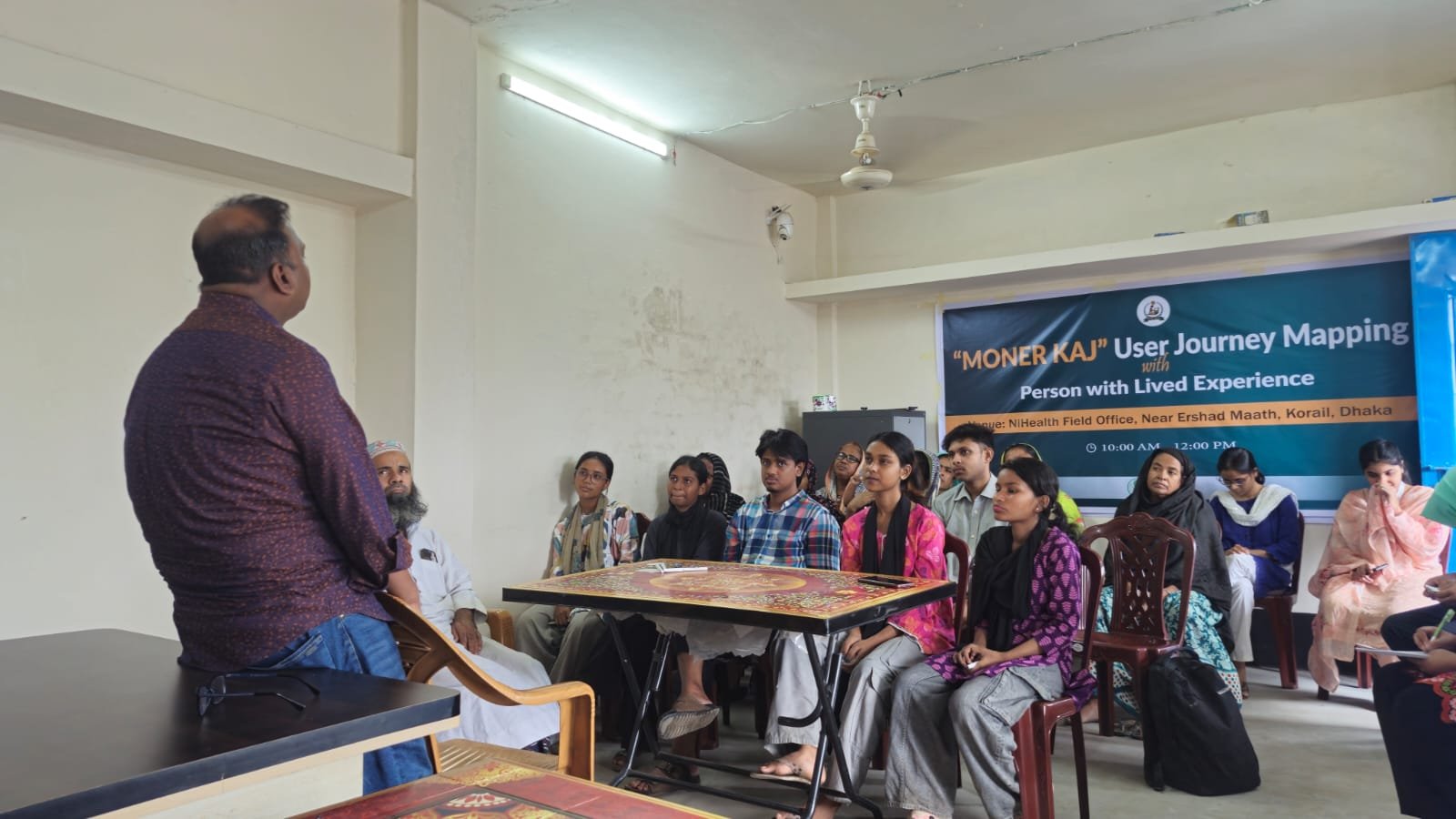
Longitudinal empirical study — art therapy, peer support & psychiatric rehabilitation — Rajshahi, Bangladesh
About the Study
Moner Kaj translates cultural craft production into clinical frameworks.
Moner Kaj translates cultural craft production into a scalable, clinically transparent framework for neurodivergent and psychiatric rehabilitation within climate-vulnerable communities. We track how standardized art therapy and structured peer support mediate psychiatric rehabilitation and bereavement coping — mapping real-time data onto validated psychological recovery trajectories.
Clinical & Socioeconomic Tracks
Domain 01
Clinical Efficacy
Symptom tracking across depression, anxiety, trauma integration. Executive function and emotional regulation measurement via behavioral activation scales.
Domain 02
Economic Mobility
Financial autonomy transformation from <2,000 BDT to 8,000-12,000 BDT/month. Direct digital payments via bKash/Nagad.
Domain 03
Social Inclusion
Isolation-to-integration measurement. Group co-regulation hours, family dynamic shifts, identity transformation tracking.
Domain 04
Resilience & Grief
Bereavement coping trajectories in climate-displaced populations. Creative expression as grief mediator. Long-term emotional resilience pathways.
Research Registry
Grief Integration Timelines in Climate-Displaced Populations
Longitudinal interviews and narrative mapping across relocation milestones.
Economic Agency as Mediator of Psychiatric Symptom Reduction
Regression analysis of income stability, autonomy, and symptom severity.
Peer Support Efficacy in Low-Resource Community Settings
Observational study of facilitator training and participant retention.
Neurodivergent Rehabilitation Outcomes via Cultural Craft Production
Mixed-methods evaluation of vocational readiness and sensory regulation.
Comparative Analysis of Art Therapy Modalities on Trauma Processing
Controlled comparison of drawing, collage, and narrative-based protocols.
Longitudinal Social Reintegration Patterns Post-Intervention
Follow-up survey tracking employment, housing, and social network stability.
Our Ongoing Studies
Grief & Art Therapy
Climate-displaced women
Year 2 · n=54
Economic Agency
Income as symptom mediator
Year 1 · n=127
Peer Support
Scaling in low-resource settings
18 months · n=38
Social Reintegration
Family dynamic shifts
Year 2 · n=89
Narrative Shifts
"She came to us unable to hold a needle. After three months of daily Kantha stitching, she leads the morning circle and teaches new members. Her family now introduces her as an artist, not a patient."
Identity Reconstruction
From 'burden' to 'breadwinner' and 'cultural custodian'. Documented across 89% of active participants.
Family Dynamic Shifts
Qualitative focus groups show movement from exclusion to respect. Average family perception change: 7.2 months.
Community Integration
Peer-worker logs document average 340% increase in voluntary social interactions within 6 months.
Empirical Therapeutic Components
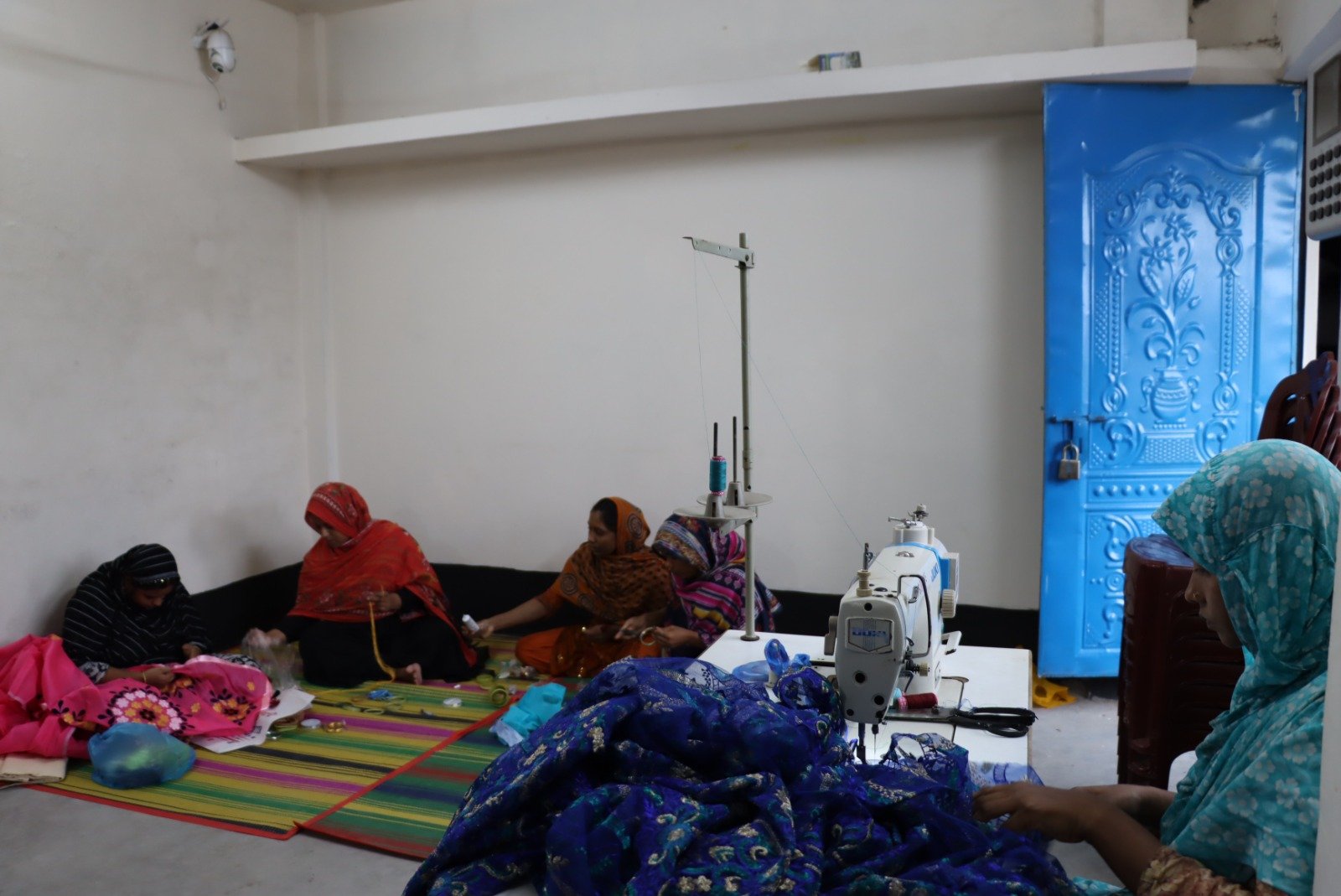
01 / SOMATIC
Creative Modalities
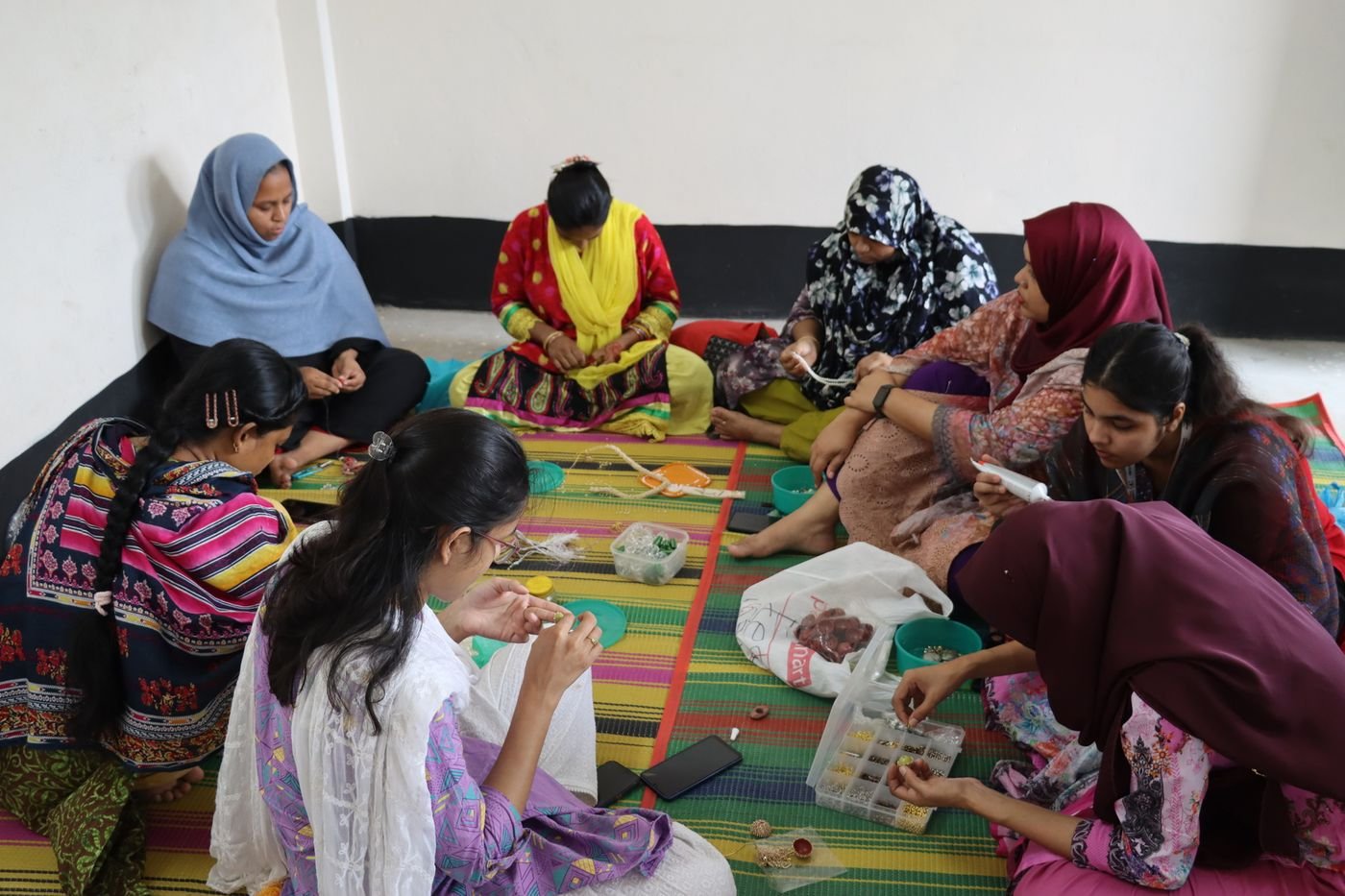
Nakshi Kantha stitching, painting, weaving as non-verbal emotional regulation. Tactile focus reduces acute anxiety.
02 / SOCIAL
Group Co-Regulation
Communal hubs combat isolation. Mirroring, collective rhythm, peer-led validation.
03 / STRUCTURAL
Routine Architecture
Predictable creative milestones restore mastery, purpose, structural consistency.
Clinical, Social & Economic Improvement
Clinical Efficacy
What we track: depression, anxiety and trauma symptoms
Longitudinal tracking follows depression (PHQ-9), anxiety (GAD-7), and trauma integration (PCL-5) alongside executive function and emotional regulation as artisans engage with craft-based work over time.
Economic Mobility
What we track: income stability and financial autonomy
Tracks artisans' movement from unpredictable informal income toward steadier earnings through digital payments (bKash/Nagad), and how that financial stability relates to overall wellbeing.
Social Inclusion
What we track: community connection and family perception
Measures change in community isolation through group participation, and shifts in how families view the artisan's role — from a perceived burden to a respected contributor and cultural custodian.
How We Collect Data
Psychometric Check-ins
Daily validated self-report via PHQ-9, GAD-7, PCL-5 instruments
Peer-Worker Narrative Logs
Qualitative observations on cognitive processing and behavioral shifts
Engagement Milestones
Session attendance, motor engagement, craft complexity indices
Economic Tracking
Income records, payment frequency, spending pattern analysis via bKash/Nagad
Focus Group Transcripts
Monthly community sessions documenting family and social dynamics
Biometric Indicators
Arousal markers, sleep quality, somatic symptom frequency
Who collects the data, and what we do with it
Measuring how each maker is doing over time, with proper scales, and then studying that data to see who is improving and why, is a core part of our research. Two roles make it happen.
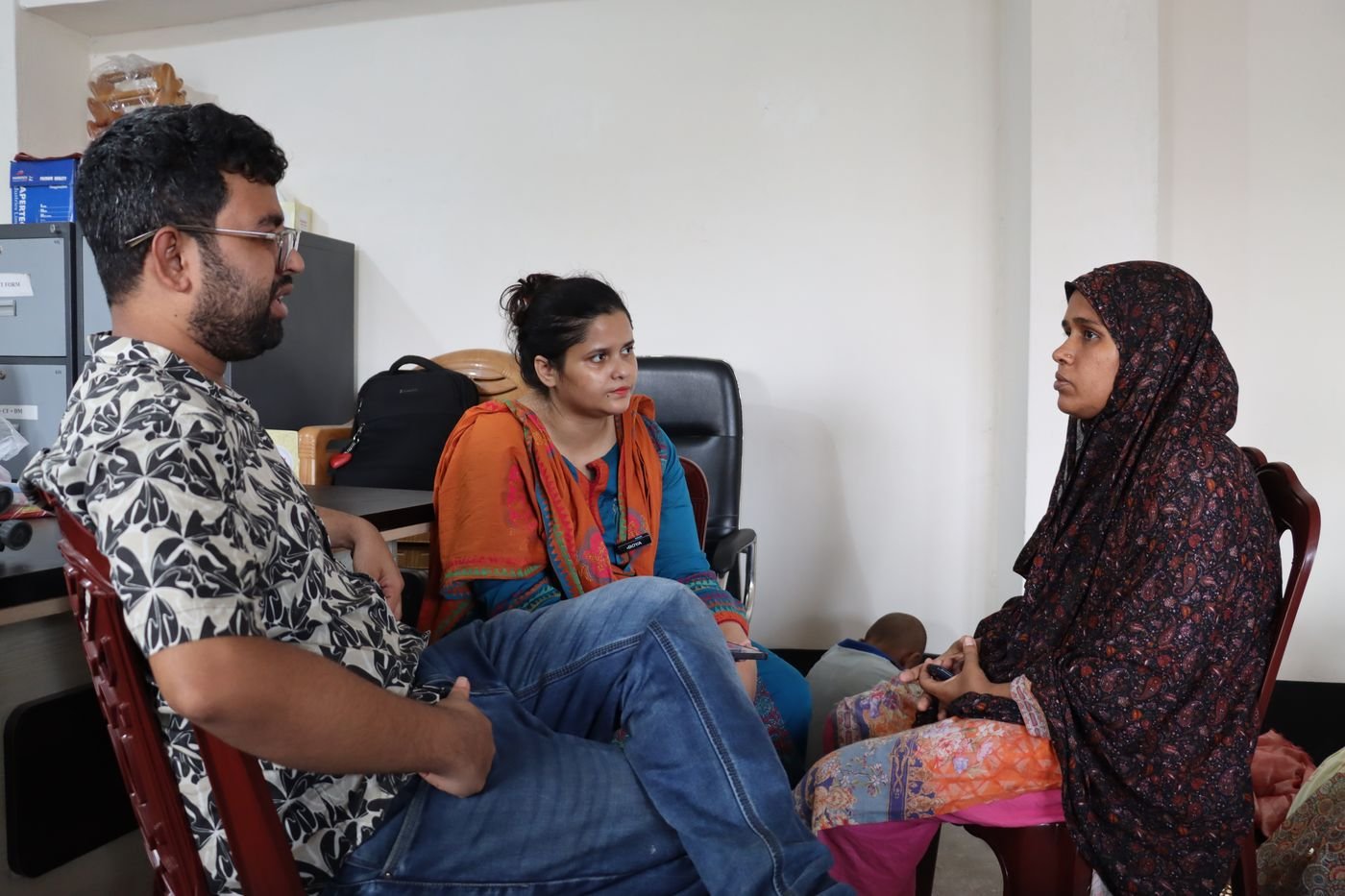
Junior Researcher
Works face to face with the makers.
- Sits with each maker at regular check-ins, and talks with them before anything is written down.
- Fills in validated scales together with the maker, such as PHQ-9 for low mood and GAD-7 for anxiety.
- Writes a short check-in note on how the maker is doing and what support was given.
Researcher
Designs the study and makes sense of the data.
- Chooses which scales and check-in forms we use, and sets them up.
- Follows each maker's scores over time, to see who is improving and who needs more help.
- Exports the data for deeper analysis, and turns the patterns into our findings.
How we keep the data honest
-
01
The same questions, every time
Once a scale has been used, its questions are locked. That way every new score can be fairly compared with the last one.
-
02
Nothing is quietly changed
A saved record is never edited. If a mistake is found, a researcher sets it aside with a written reason, so the full history stays visible.
-
03
Watching the trend, not one day
We look at how each person's scores move over weeks and months on the same scale, rather than judging from a single visit.
-
04
Stepping in early
When someone's latest score is high, they are flagged, so the team can check in with them and offer support quickly.
-
05
Privacy comes first
Researchers see only what the research needs. Personal details such as bank or ID information are never shown to them.
We will share more detail about this work soon.
Exploratory Studies
How Color Influences Mental Health
Exploring how exposure to specific color palettes from traditional Bengali craft shapes mood, focus and emotional regulation.
Ornamental Jewellery & Psychological Well-being
Examining how traditional jewellery-making practices and the wearing of ornaments shape self-image and social confidence.
Climate Influence on Clothing & Jewellery Selection
Studying how seasonal monsoon cycles, humidity and temperature shifts guide what people choose to wear and adorn.
Join Our Online Research
Be part of groundbreaking studies exploring the intersection of culture, art, and mental well-being. Participate from anywhere in the world.